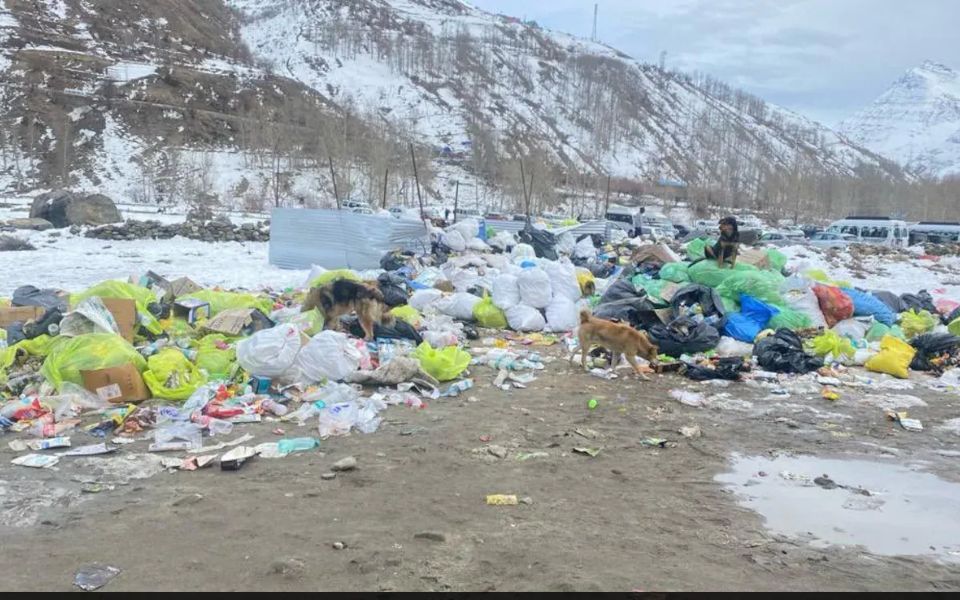
A recent social media post by Indian Forest Service (IFS) officer Parveen Kaswan has reignited concerns over irresponsible tourism and environmental neglect in the fragile Himalayan ecosystem. In an Instagram video shared by the officer, snow-covered hills and a frozen water body can be seen strewn with plastic bottles and other waste. The video was filmed during the Manimahesh Yatra in Himachal Pradesh, one of the region’s most sacred pilgrimages.
Click Here to watch Viral video:
In his caption, Kaswan questioned the popular travel phrase “the hills are calling,” asking whether people truly respect the mountains they claim to love. He pointed out that even at an altitude of nearly 13,000 feet, visitors continue to leave behind garbage, permanently scarring pristine landscapes. He also tagged environmental nonprofit Healing Himalayas, which works on cleaning and conserving Himalayan regions, and environmentalist Pradeep Sangwan.
For the uninitiated, Manimahesh Lake is among Himachal Pradesh’s most revered pilgrimage sites. Located in the Chamba district at the base of the Manimahesh Kailash Peak (around 18,500 feet), the lake holds deep religious significance for devotees of Lord Shiva. The annual Manimahesh Yatra takes place during the Hindu month of Bhadon (August–September), attracting thousands of pilgrims who trek through challenging terrain to take a holy dip in the lake.
Kaswan’s post triggered a wave of reactions online. Several users expressed anger and disappointment over the lack of civic sense among tourists and pilgrims. Many blamed overtourism for worsening waste problems in mountain regions, while others called for environmental education to be made a compulsory part of school and college curricula. The sentiment across comments was clear: development and spiritual travel mean little without responsibility toward nature.
Environmental experts have long warned that Himalayan ecosystems are extremely fragile. Plastic waste at high altitudes decomposes very slowly due to low temperatures and lack of oxygen. Litter near water bodies also contaminates freshwater sources and threatens local wildlife. Once damaged, these ecosystems can take decades to recover.
As travel to the Himalayas continues to rise, experts stress that individual responsibility is as important as policy enforcement. Simple, mindful actions can significantly reduce environmental damage.
Tips for Responsible Waste Disposal While Trekking
- Repackage food before travel to reduce plastic waste.
- Carry all waste back with you; never leave trash behind or burn it.
- Check campsites and rest areas for litter before moving on.
- Dispose of human waste in catholes 6–8 inches deep, at least 200 feet away from water sources.
- Use biodegradable soap sparingly and wash away from streams or lakes
- The mountains may look timeless and strong, but they are far more vulnerable than they appear. Protecting them begins with respecting them.