(image source : google)
Air travel is set to undergo noticeable changes in 2026, with updated airport security procedures, stricter identification requirements, evolving airline policies, and a stronger focus on passenger preparedness. This guide explains what travelers need to know and how to adapt smoothly to these developments while avoiding unnecessary stress at airports.
Key Airline Travel Changes to Know in 2026
Real ID Enforcement and Additional Fees
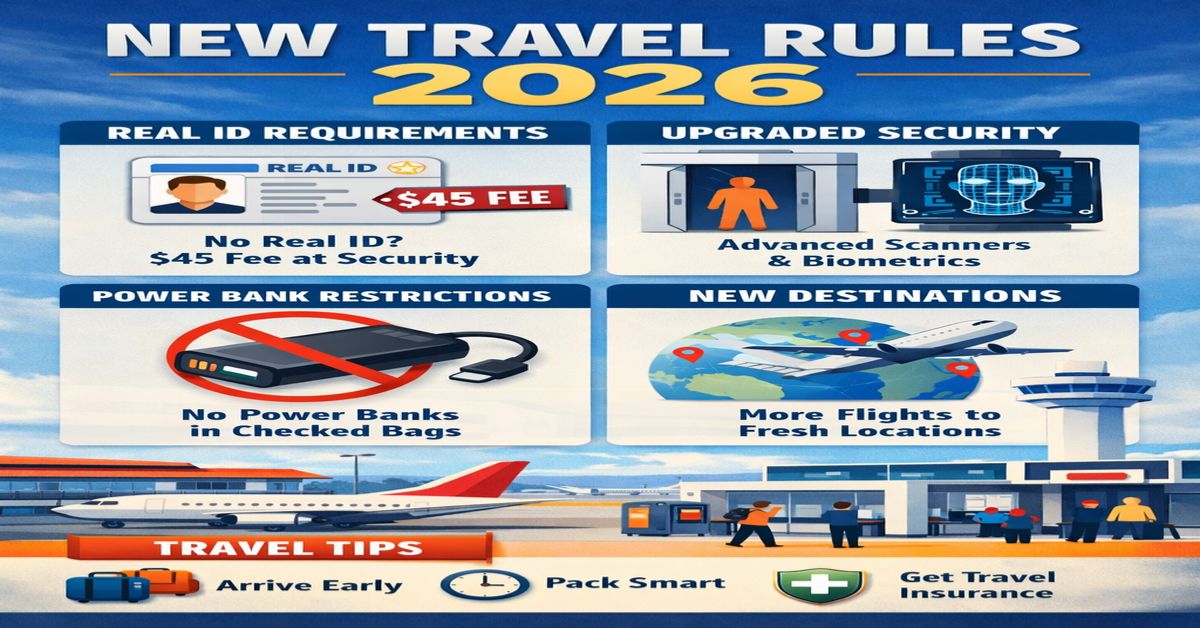
From December 2025 moving into 2026, passengers who do not carry a Real ID will be charged a $45 fee when using alternate forms of identification at U.S. airport security checkpoints. Real ID requirements apply to travelers aged 18 years and above.
Passengers without a Real ID can still use a passport for domestic travel. TSA verification allows a 10-day usage window of a pre-approved alternate ID after verification and fee payment. The additional charge reflects the extra time required by TSA officers to process alternate identification, which can impact standard security lines.
Airport Security Technology Upgrades
Many airports have adopted advanced imaging technologies, including tomography systems, which allow bags, liquids, and electronics to be scanned without being removed during screening.
Despite these upgrades, liquid rules remain unchanged:
- One quart-sized liquids bag per passenger
- Containers must not exceed 3.4 ounces
In many cases, passengers can keep their liquids bag inside their personal item, reducing delays at checkpoints.
Facial recognition and biometric screening are also increasingly used. Travelers retain the right to opt out, though doing so may result in longer wait times at security.
TSA Checkpoint Access Clarifications
There have been reports about paid access to escort family or friends through TSA checkpoints. However, these claims remain uncertain, and travelers are advised to verify details directly through official TSA sources before planning.
Portable Charger and Power Bank Restrictions
Several Asian airlines have implemented restrictions on portable power banks in checked luggage due to lithium-ion battery fire risks. Power banks must be carried in personal items and cannot be charged inside checked baggage.
Some airlines also restrict charging phones inside carry-on luggage while allowing charging under passenger supervision in the cabin. Power banks with built-in safety features that stop charging during overheating are recommended.
Airline Routes and Changing Travel Expectations
Airlines are expanding routes to new destinations, encouraging travelers to explore beyond traditional cities. At the same time, passengers are advised to adjust expectations related to onboard comfort and amenities, as not all flights provide complimentary or premium services.
Practical Travel Tips for Flying in 2026
Packing and Preparation
Travelers are advised to pack thoughtfully to handle potential delays:
- Carry snacks and extra medication
- Bring an empty water bottle to refill after security
- Arrive at least 2 hours before domestic boarding, with earlier arrival recommended at busy airports
Downloading airline apps helps passengers receive real-time flight updates and boarding information without excessive email notifications.
Security Screening Adjustments
Security procedures may vary by airport:
- Shoe removal is not always required, though exceptions still occur
- Larger electronics may need to be removed if requested
- Following TSA instructions carefully helps avoid delays
Maintaining a calm and respectful attitude toward security staff contributes to a smoother experience.
Importance of Travel Insurance
Travel insurance is strongly recommended to manage flight delays, cancellations, and medical coverage, especially for international travel. Increased flight frequency during peak seasons can also lead to mechanical delays, making preparation essential.
Travel Mindset for 2026
Adopting the right mindset plays a key role in stress-free travel. Accepting minor inconveniences, avoiding negative comparisons, and viewing air travel as an opportunity rather than a burden can significantly improve the overall journey.
Conclusion
The airline travel landscape in 2026 reflects tighter identification enforcement, upgraded airport security technologies, and revised airline safety policies. Staying informed through official channels, preparing in advance, and remaining flexible will help travelers navigate these changes with confidence. With the right planning and mindset, flying in 2026 can remain a smooth and manageable experience despite evolving regulations
Also Read: Dubai Cheap Flights: Air Tickets to Dubai Starting at Just Rs 5,000 : New Year Travel Bonanza